Separating the Moment from the Photograph
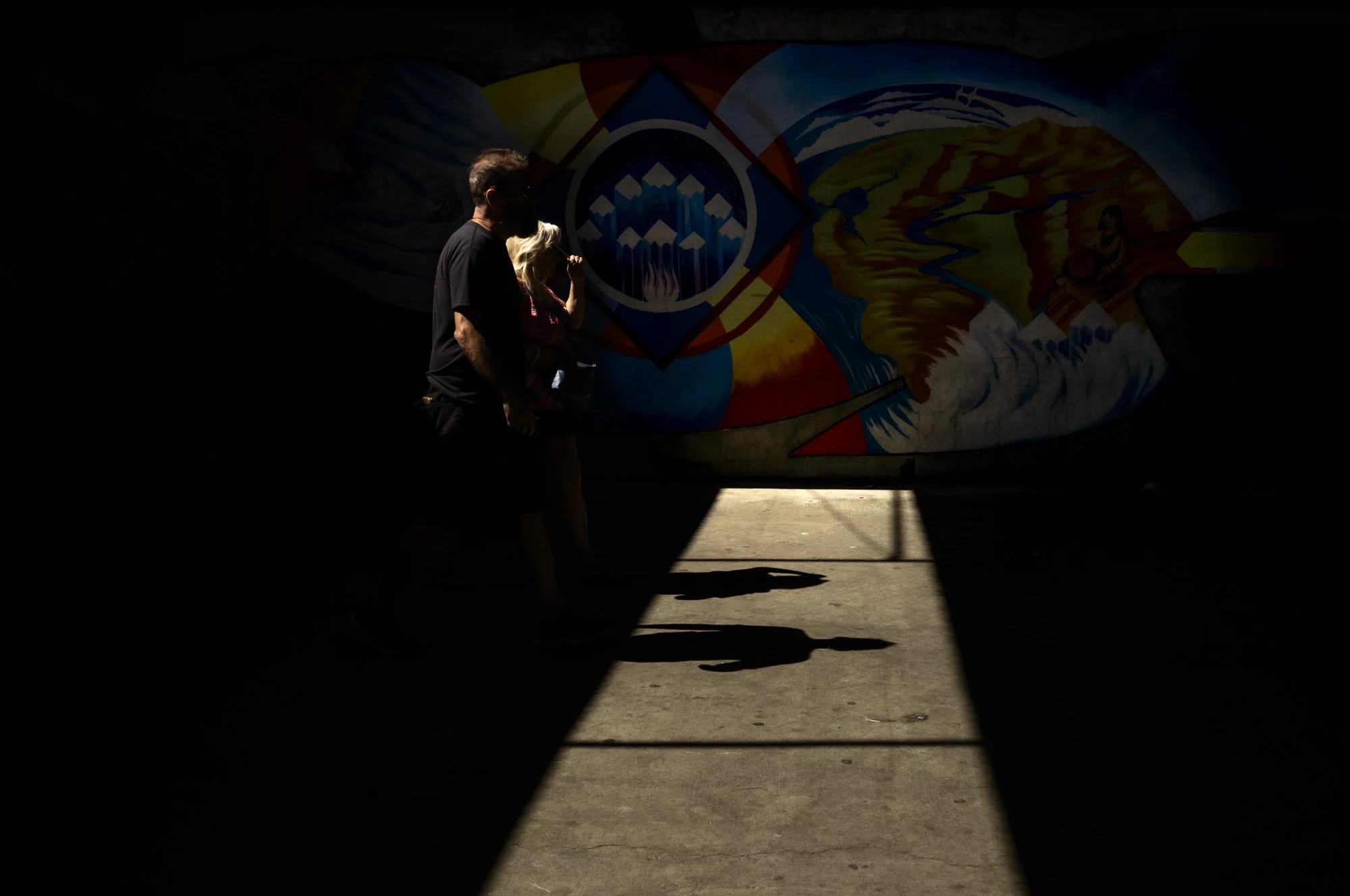
No experience necessary for this one. It stands on its own.
I The other day I was on Zoom for an online street photography workshop, and we started by reviewing our “baseline” images. A handful of my photographs contained no people, as that’s the kind of photography I’ve been doing this past year, and those are the ones the instructor singled out first. I found myself on the defensive without a word spoken by anyone.
Don’t get me wrong, it was a supportive atmosphere, but I felt the need to explain that if we were to show where we were at that point in time, those pictures represented that for me. As we went through a couple of them, I found myself not just talking about the picture, but the circumstances of taking it, and the fact I find it hard to separate the two. Now, I’m not sure if I’ve always known that, or suspected it, or what, but saying it out loud in front of a group of other photographers felt a bit embarrassing.
No matter how great the moment, photographs need to stand on their own.
My last newsletter was about my favorite ten photographs of the year. Almost half of them were selected by me because of circumstances and/or brilliant powers of observation surrounding the taking of the photograph. Don’t get me wrong, I think they’re great photographs, but if they made the list partly because of what I did or thought in making them, then something is out of whack. How did I get so wrapped up in tying the experience to the photograph?
Certainly, there’s nothing wrong with a photographer reminiscing about how a photograph was made, but if that memory affects editing (culling) one’s photographs, then that’s a problem. Case in point: this photograph of the sun lighting the bulb in a lamp has been in a few of my newsletters as of late. Is it a good photograph on its own? Or do I just think so because I felt I was so clever to see the composition and execute it? To tell you the truth as of this writing, I honestly can’t answer the question. I have so tightly wound my ego around this photograph that I have lost all objective reason surrounding it.
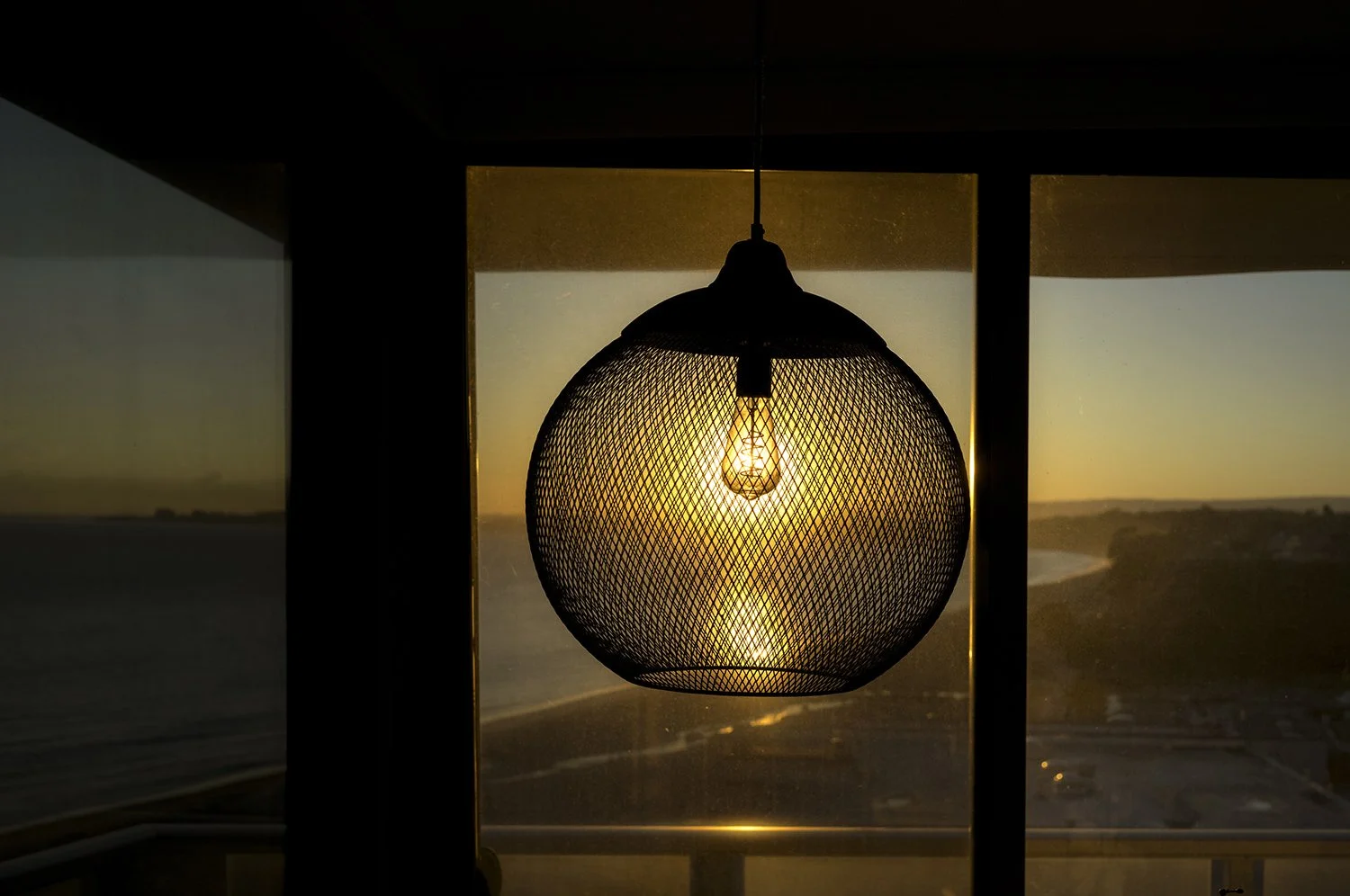
Does this work without providing experiential context?
This is not good. Editing one’s photographs is hard enough without the ego getting in the way. Obviously, eradicating it 100% is near impossible, but when it comes to choosing your darlings from the stack, there needs to be some sort of distance between ego and reason.
But isn’t the experience of taking photographs often greater than the photo itself? Haven’t I and many others espoused that it’s the process that matters more than the final product? Indeed, isn’t the experience the entire reason I go out and take photographs? I would answer wholeheartedly yes, but should that influence me when editing photographs?
The answer is it depends. On one hand, I curate photographs. On the other, I’m preserving memories. I would venture to say that sometimes those two will cross over and meet in the same photograph, but for the most part, I think they exist as separate entities.
So how do I reconcile this dilemma? I think it’s pretty straightforward. When I’m putting together lists like my favorite ten photos from a year, I see no harm in including photographs that evoke strong memories, as these are mostly for me (even if I do share them). But when I’m choosing photographs to post for a series or enter into some exhibition, I need to use my more practical eye and judge the photograph solely on its own merit.
This all may seem obvious to many, but I’m not going to apologize for being emotionally invested in what I do. I’d much rather have my problem of trying to extract emotion out of my editorial decisions than have no emotions in my photography at all. I see this as a lifetime battle with no real loser as it involves taking pictures, something I not only love, but is a part of me. When it comes down to it, living with joy is what it’s all about.
If you enjoy my work, here are a few ways to show your support:
Buy me a coffee: Your support helps fuel my creative journey. https://buymeacoffee.com/davidmullin